The house you want may already be on the market — it just needs a new roof, a working HVAC system, or a kitchen that is safe to use. An FHA 203(k) renovation loan is built for that gap. It lets you finance the purchase, or a refinance, and the eligible repairs in one mortgage, instead of stacking a short-term improvement loan on top of a first mortgage.
That is useful in DFW, where an older house can be a better value than a move-in-ready listing, but only if the work is funded and the finished home will meet FHA's property standards. Limited and Standard 203(k) are not the same product, and HUD's current caps, reserves, and county loan limits decide what will actually close.
Limited vs. Standard 203(k): which structure fits the work
A Limited 203(k) is for minor remodeling and nonstructural repairs. There is no minimum repair cost, and total rehabilitation costs may not exceed $75,000. An FHA-approved 203(k) consultant is optional. Mortgagee Letter 2024-13, effective for case numbers assigned on or after November 4, 2024, set that $75,000 cap and said FHA would review it when nationwide loan limits are published. The 2026 loan-limit letter did not announce a new cap, and HUD's current materials still use $75,000.
A Standard 203(k) is for major rehabilitation or repairs, including structural work. There is a minimum repair cost of $5,000 and no HUD maximum on the renovation budget itself, though the loan still has to fit FHA's mortgage limits. A consultant is required and prepares the Work Write-Up and cost estimate.
Limited 203(k) cannot be used for work HUD treats as "major": repairs expected to take more than nine months, jobs that need more than two payments per specialized contractor, appraisal-required repairs that need a consultant Work Write-Up or architectural plans, or work that keeps you from occupying the home for more than 30 days in total. If you cannot live in the house during a larger project, you are usually looking at a Standard 203(k).
Both types can purchase or refinance and rehabilitate an existing home that is at least a year old, including one- to four-family homes, townhomes, certain manufactured homes titled as real estate where the work does not affect structural components, and eligible condominium units (interior work only). Eligible work can include repairing or replacing major systems; remodeling a kitchen or bath; replacing roofing, siding, windows, or flooring; making accessibility or energy-efficient upgrades; and, on a Standard 203(k), structural repairs, additions, and finishing an attic or basement. HUD does not allow 203(k) proceeds to finance luxury or recreational items, or improvements that do not become a permanent part of the property. Handbook 4000.1 lists examples such as new swimming pools, exterior hot tubs, barbecue pits, tennis courts, satellite dishes, and gazebos. An existing in-ground pool may be repaired or removed.
Current HUD caps, reserves, and DFW loan limits
For a Standard 203(k), a contingency reserve is generally required on structures 30 years or older — at least 10% and no more than 20% of financeable repair costs, or at least 15% if utilities are not operable. On newer homes it is required at 10% to 20% when there is termite damage; otherwise it is discretionary, still capped at 20%. For a Limited 203(k), a contingency reserve is not required, but a lender may establish and finance one, also capped at 20%.
On a Standard 203(k), the lender may finance a mortgage payment reserve to make payments only while the property cannot be occupied, not to exceed 12 months or the completion period in the Rehabilitation Loan Agreement. Limited 203(k) loans may not finance that reserve, which fits the rule that Limited work should not keep you out of the house for more than 30 days. Completion periods may not exceed 12 months for Standard 203(k) or nine months for Limited 203(k). Permits must be obtained before work starts and posted on site.
The finished loan also has to fit FHA's county limits. For case numbers assigned on or after January 1, 2026, Mortgagee Letter 2025-23 set the national one-unit floor at $541,287 and the ceiling at $1,249,125. In the Dallas-Fort Worth-Arlington metro area, HUD's official 2026 list puts the one-unit limit at $563,500, with $721,400 for two units, $872,000 for three units, and $1,083,650 for four units. That limit applies in Collin, Dallas, Denton, and Tarrant Counties, and in Ellis, Hunt, Kaufman, Rockwall, Johnson, Parker, and Wise Counties. Purchase price plus rehab can reach that cap faster than a purchase-only loan, so check it early.
Like other FHA purchase loans, a 203(k) generally follows FHA's minimum required investment and credit-score rules. Handbook 4000.1 requires a minimum required investment of at least 3.5% of the Adjusted Value and allows maximum financing — typically a 96.5% loan-to-value — when the borrower's minimum decision credit score is 580 or higher. Scores between 500 and 579 are limited to a maximum 90% LTV. Many lenders set higher overlays on renovation loans. For the credit side of the same file, see what credit score you need to buy a house.
How a 203(k) loan works, step by step
Identify the property and the scope, or plan a refinance that funds the work in the same loan. The lender then decides whether the job is Limited or Standard. On a Standard 203(k), the lender selects an FHA-approved consultant from HUD's roster. On a Limited 203(k), you submit a work plan and contractor estimates; a consultant may still be used.
An appraiser values the property, including the after-improved value that helps set the maximum mortgage. Underwriting reviews credit, income, debts, and cash to close as it would on other FHA loans. The documents you gather before you apply still matter; our checklist is in five things you must do before applying for a home loan. At closing, funds to buy the house or pay off the existing mortgage are disbursed, and the rehabilitation money is held in escrow. Work can start after permits are in place. The lender releases draws as inspections confirm completed work, and unused reserves are typically applied to principal once the job is done.
A payment example at today's rates
Freddie Mac's Primary Mortgage Market Survey, as of November 12, 2026, put the U.S. average 30-year fixed rate at 7.11% and the 15-year at 6.45%. Those are national averages for conventional loans in the survey, not an FHA quote on a specific 203(k).
Here is a simplified illustration only. Suppose you contract to buy a DFW house for $320,000 and plan $50,000 of Limited 203(k) work — under the $75,000 cap. Purchase plus rehab equals $370,000. A 3.5% minimum required investment on that $370,000 figure would be $12,950, and a 96.5% loan would be $357,050. Principal and interest on $357,050 at 7.11% for 30 years are about $2,401.90 a month.
| Simplified illustration | Amount |
|---|---|
| Purchase price | $320,000 |
| Eligible rehab (Limited 203(k)) | $50,000 |
| Combined costs before other fees | $370,000 |
| 3.5% minimum required investment | $12,950 |
| Illustrative 96.5% base loan | $357,050 |
| Estimated P&I at 7.11%, 30 years | $2,401.90 |
This is not a formal 203(k) maximum-mortgage calculation. FHA also looks at after-improved value, eligible fees, and any financeable reserves, and the actual rate will differ. Taxes, insurance, and FHA mortgage insurance are not included; if the upfront premium is financed, the loan amount would be higher. Your payment has to work on the full loan, not on the purchase price alone.
Who an FHA 203(k) can fit in DFW — and who should look elsewhere
A 203(k) can be a fit if you have found an older house in Dallas, Collin, Denton, Tarrant, or a nearby county that needs systems, a kitchen, or more serious structural work, and you can qualify for the payment on the combined loan. It can also help when the house would not meet FHA's minimum property requirements without repairs, or when a homeowner wants to refinance and renovate.
It is usually a poor fit for a luxury project, a Limited 203(k) that cannot meet the timeline or occupancy rules, or a purchase-plus-rehab that would break the $563,500 one-unit FHA cap in DFW. Buyers who are stronger conventional candidates, or whose project does not match 203(k) rules, may be better with Fannie Mae's HomeStyle Renovation mortgage, which can finance a purchase or refinance plus repairs, remodeling, or energy improvements. Fannie Mae's Selling Guide (B5-3.2-01, December 10, 2025) says work must be completed within 15 months of closing and that the program is not for a complete tear-down and rebuild.
If you already own the home and mainly need cash later, after the work is done and you have equity, compare a cash-out refinance or a HELOC under Texas homestead rules. We covered that choice in HELOC vs. cash-out refinance in Texas. HUD also notes that if you do not need to buy or refinance the property, a Title I Property Improvement Loan may be another path.
Let's run your numbers
If you have a DFW house in mind and a repair list, Clarity Home Lending can tell you whether the job looks like a Limited or Standard 203(k), how it compares with a HomeStyle renovation loan, and what the payment looks like with current pricing.
Call (972) 210-9264 or start an application. Clarity Home Lending, NMLS# 2527964.
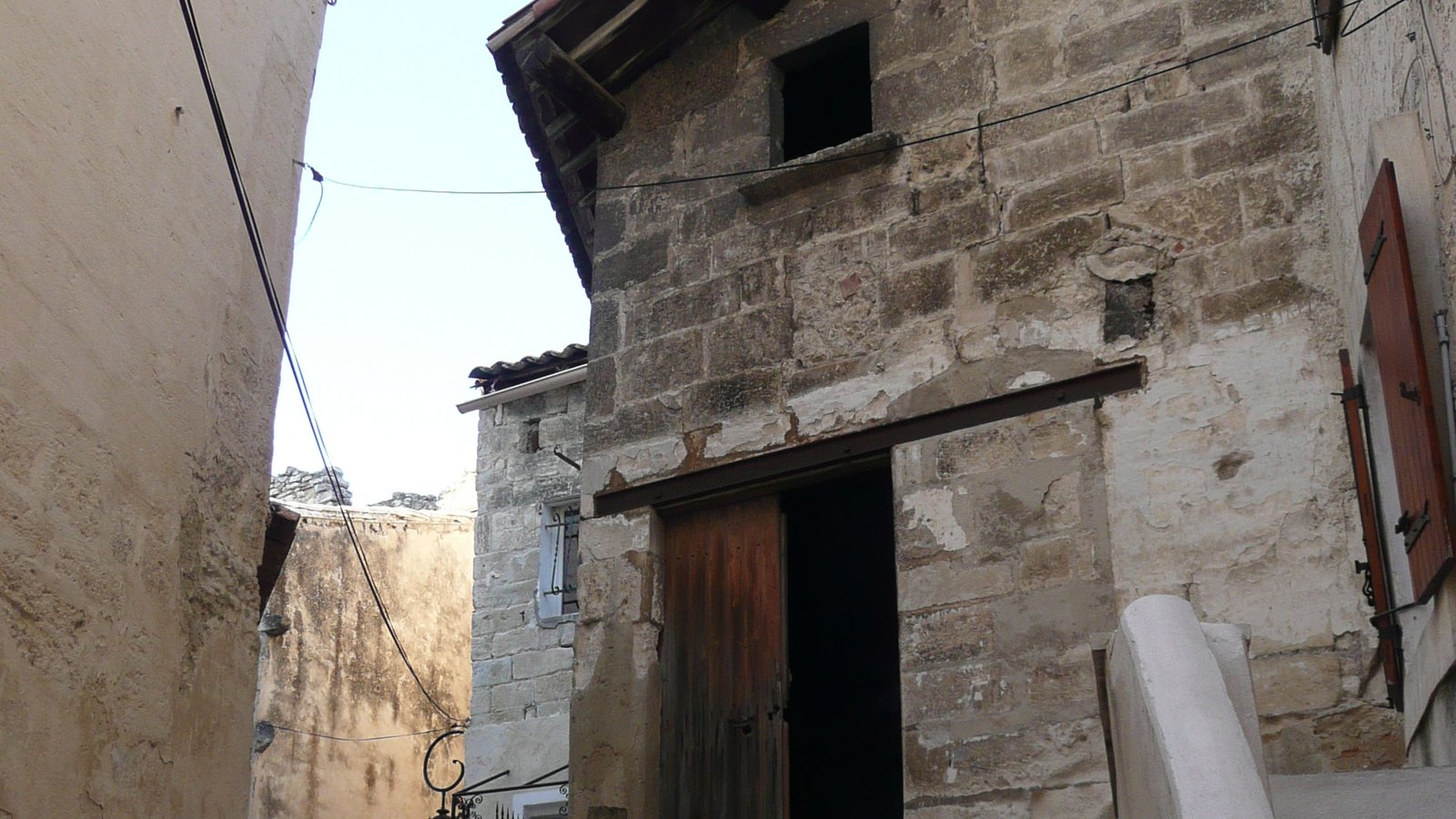
Photo: a house under renovation in Aramon, France, used as a general illustration — not a DFW listing. Photograph by Vi..Cult..., Wikimedia Commons, licensed under CC BY-SA 2.5. Source: File:Vieille maison en rénovation en Aramon en Avril 2008.JPG. Cropped and resized. This is not a computer-generated image.
Clarity Home Lending is an Equal Housing Opportunity Lender. This article is not a commitment to lend. Rates and programs are subject to change and to credit and property approval. Payment examples are principal-and-interest estimates only and are not a quote. Sources: HUD 203(k) program page; HUD consumer fact sheet (revised November 4, 2024); Mortgagee Letter 2024-13; Handbook 4000.1 (revised August 13, 2025); Mortgagee Letter 2025-23; HUD 2026 FHA county limits; Freddie Mac PMMS as of November 12, 2026; Fannie Mae Selling Guide B5-3.2-01.